Artificial Intelligence has progressed rapidly—from simple rule-based programs to advanced generative models like ChatGPT and Gemini. But the next major leap in AI technology is already here, and it’s called Agentic AI.
Agentic AI represents a new era where AI systems can not only generate answers but also think, reason, plan, take actions, and work autonomously to achieve goals.
What is Agentic AI?
Agentic AI refers to AI systems that can autonomously plan, make decisions, take actions, and achieve goals with minimal human intervention. Unlike traditional AI, which only answers queries or performs predefined tasks, Agentic AI behaves like an “intelligent agent.”
An agent:
- Understands goals
- Breaks tasks into sub-tasks
- Makes decisions
- Executes actions
- Learns from feedback
- Adjusts strategies automatically
This ability to act, not just react, is what makes it revolutionary.
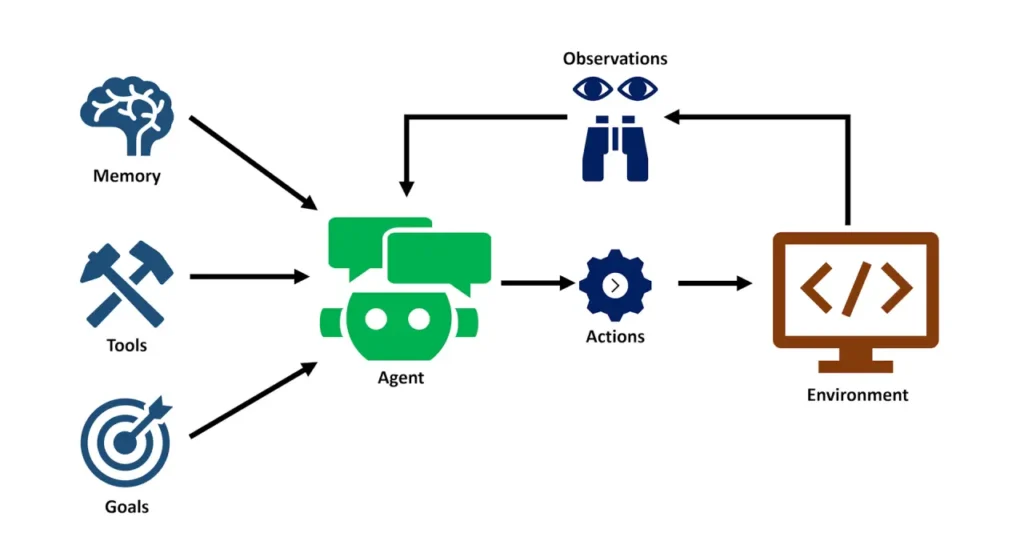
How Does Agentic AI Work?
It is built on three core pillars:
1. Reasoning – The AI analyzes the problem, identifies goals, and plans steps to reach the solution.
2. Planning – It creates a workflow or strategy by breaking tasks into smaller actionable steps.
3. Action Execution – The AI interacts with tools, APIs, software, or environments to perform tasks—sometimes looping or self-correcting until success.
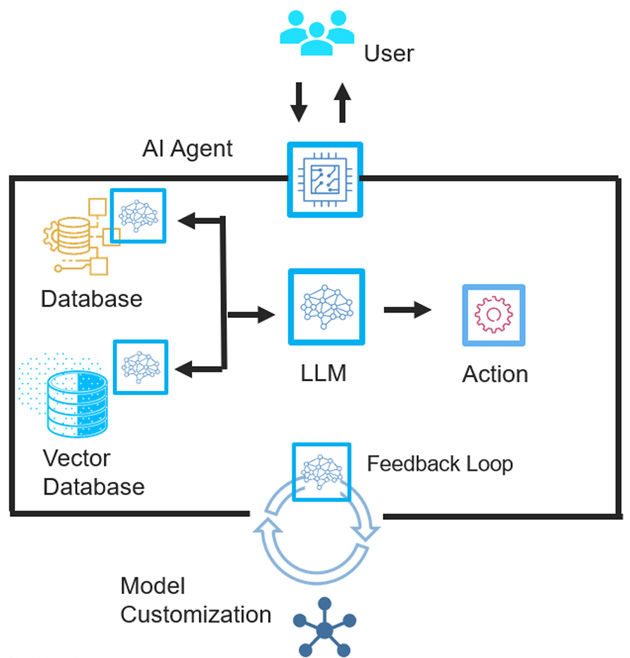
It’s systems rely on:
- Large language models (LLMs)
- Tool calling
- APIs
- Memory systems
- Autonomy frameworks
- Feedback loops
Example: A user says — “Analyze my Google Analytics data and create a marketing plan.”
An agentic AI could:
- Connect to GA4
- Pull traffic and conversion data
- Analyze trends
- Prepare a plan
- Generate a presentation
- Send the report via email
This is far beyond standard AI chat.
Key Features of Agentic AI
1. Autonomy – It can work without continuous human instructions.
2. Multi-Step Reasoning – It solves complicated tasks by thinking step-by-step.
3. Tool Usage – Agentic AI uses tools, APIs, software, and code to complete tasks.
4. Memory & Recall – It remembers past interactions and uses them to improve results.
5. Adaptability – It adjusts its strategy based on real-time feedback.
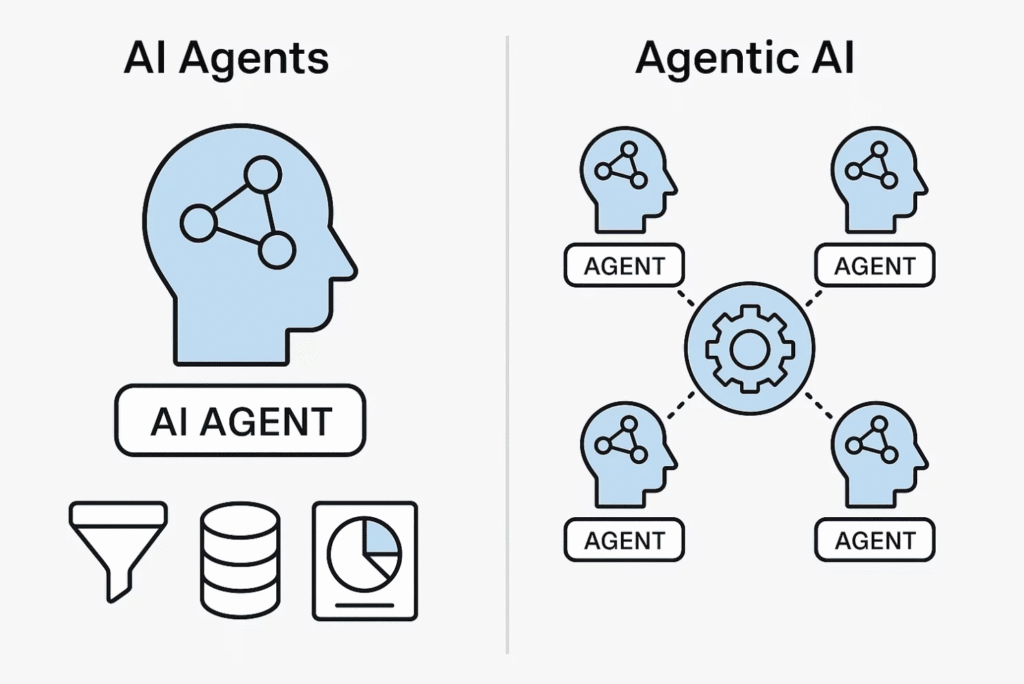
6. Multi-Agent Collaboration – Multiple AI agents can work together—e.g., a Research Agent, Planning Agent, and Execution Agent.
Agentic AI vs Traditional AI
| Feature | Traditional AI (e.g., ChatGPT-style) | Agentic AI |
|---|---|---|
| Provides answers | ✔ | ✔ |
| Takes actions | ✖ | ✔ |
| Can plan tasks | Limited | Advanced |
| Autonomy | Low | High |
| Executes multi-step workflows | ✖ | ✔ |
| Uses external tools / APIs | Limited | Strong |
| Works like a human assistant | Partially | Fully |
Agentic AI is essentially the evolution from AI chatbots to AI workers.
Real-World Applications
1. Software Development
- AI writes code
- Tests it
- Fixes bugs
- Deploys applications
Tools like GitHub Copilot Agent use agentic workflows to automate development tasks.
2. Digital Marketing Automation
It can:
- Research keywords
- Generate content
- Create ads
- Analyze performance
- Optimize campaigns
It works like a full marketing team.
3. Customer Support
AI can read customer queries, classify issues, access CRM software, and resolve problems automatically.
4. Business Operations
It can:
- Manage inventory
- Automate workflows
- Create reports
- Send emails
- Process data
5. Healthcare
- Automated diagnosis support
- Scheduling
- Patient data analysis
- Personalized health plans
6. Finance
- Fraud detection
- Risk analysis
- Automated investment strategies
7. Education
AI tutors can plan lessons, evaluate student performance, and personalize learning.
Benefits of Agentic AI
1. Massive Productivity Boost – Automates hours of manual tasks in minutes.
2. Cost Efficiency – A single AI agent can replace multiple repetitive processes.
3. 24/7 Consistency – Unlike humans, AI agents never get tired or distracted.
4. Better Decision-Making – AI analyzes more data than humans can.
5. Scale Without Limits – Businesses can deploy hundreds of AI agents instantly.
Challenges & Risks
1. Errors in Autonomous Decisions – Without proper guardrails, AI might take incorrect actions.
2. Data Privacy Issues – AI agents need access to sensitive tools and databases.
3. Dependency Risks – Over-reliance may reduce human expertise over time.
4. Ethical Concerns – AI autonomy must be controlled responsibly.
Future of Agentic AI
It is expected to transform nearly every industry.
In the next 5–10 years, we may see:
- AI employees working alongside humans
- Fully automated companies run by AI
- Multi-agent ecosystems solving complex global problems
- AI managing logistics, factories, and operations
- Personal AI managers handling people’s day-to-day tasks
Tech leaders predict Agentic AI will be as revolutionary as the internet.
Examples
- OpenAI o1 + Agent Frameworks
- GitHub Copilot Agents
- Google’s Autonomous Agents
- ReAct Agents (Reasoning + Action)
- AutoGPT & BabyAGI
- LangChain Agents
These tools show how AI is shifting from predictive text to action-driven intelligence.
Conclusion
It represents the next major evolution of artificial intelligence — from chatbots that respond, to autonomous agents that reason, plan, and take action. It opens the door for a future where AI is not just a tool but an active collaborator.
Businesses, creators, educators, marketers, and developers who adopt Agentic AI early will have a massive competitive advantage.
FAQs
1. What is Agentic AI?
It refers to AI systems that can autonomously plan, make decisions, and take actions to achieve specific goals with minimal human input.
2. How is Agentic AI different from normal AI?
Traditional AI provides answers, while Agentic AI can reason, plan, and execute tasks, acting like an intelligent agent.
3. Where is Agentic AI used?
It is used in software development, digital marketing, automation, customer support, finance, healthcare, and business operations.
4. Is Agentic AI safe to use?
Yes, but it requires proper control, permissions, and oversight to avoid errors or unintended actions.
5. Can Agentic AI replace human jobs?
It won’t fully replace humans but will automate repetitive tasks, allowing people to focus on higher-level work.