In today’s fast-changing digital world, every digital marketer in 2026 is looking for smarter and faster ways to grow websites. Traditional SEO methods still work, but they take a lot of time and effort. This is where Programmatic SEO becomes a powerful solution.
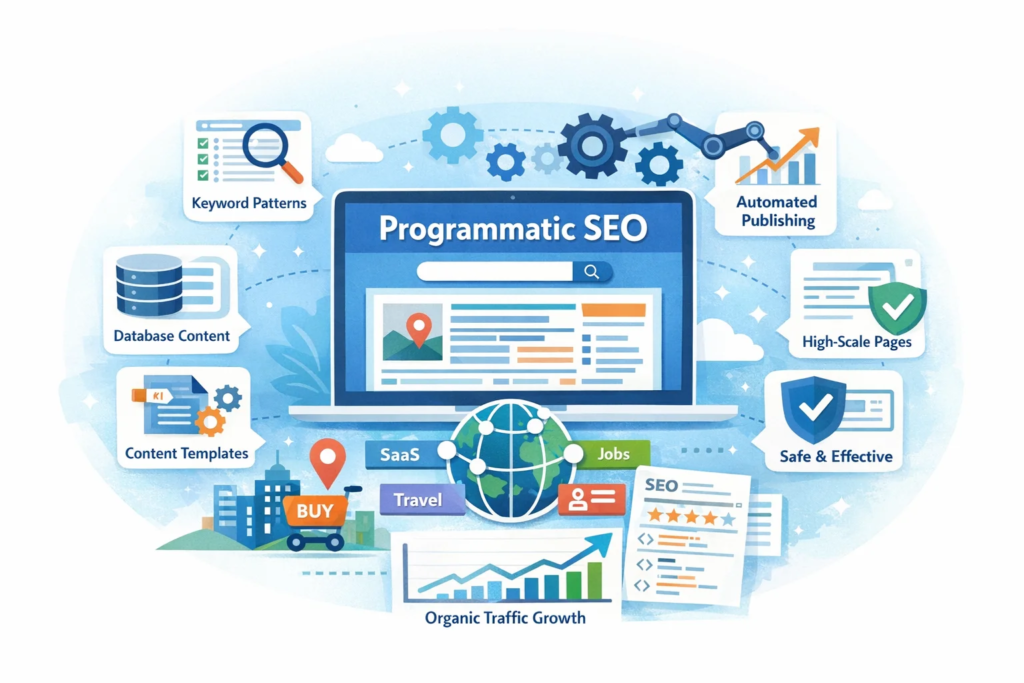
Programmatic SEO is a strategy where you create hundreds or even thousands of web pages automatically using data, templates, and automation tools. Instead of writing each page manually, you build a system that generates pages at scale.
In this case study, we will explain how Programmatic SEO helped scale Organic Traffic from zero to thousands of visitors. We will break everything down step by step so you can understand and apply it easily.
What is Programmatic SEO?
Before diving into the case study, let’s understand the concept.
Programmatic SEO is the process of creating large numbers of SEO-optimized pages using:
- Data (keywords, locations, products, etc.)
- Templates (page structure)
- Automation tools
For example:
- “Best gyms in Bhopal”
- “Best gyms in Indore”
- “Best gyms in Delhi”
Instead of writing each page manually, you create one template and generate hundreds of similar pages automatically.
This approach is widely used in digital marketing services websites, directories, e-commerce platforms, and SaaS tools.
Read also : 7 Proven Local SEO Strategies That Boosted Google Maps Rankings
Why Programmatic SEO is Important in 2026
For a digital marketer in 2026, competition is higher than ever. Ranking a single page is not enough anymore.
Here’s why Programmatic SEO is important:
1. Scale Faster
You can create 1000+ pages quickly without writing each one manually.
2. Target Long-Tail Keywords
You can rank for thousands of low-competition keywords.
3. Save Time and Cost
Automation reduces manual work and content creation costs.
4. Increase Organic Traffic
More pages = more chances to rank = more Organic Traffic
Case Study Overview
Let’s look at a real-style case study approach.
Goal:
Increase Organic Traffic using Programmatic SEO
Niche:
Digital marketing / local services
Strategy:
Create scalable pages targeting long-tail keywords like:
- “Digital marketing services in [city]”
- “SEO agency in [location]”
Step 1: Keyword Research
The first step was to find scalable keywords.
Instead of targeting only big keywords like:
- digital marketing services
We focused on long-tail keywords such as:
- digital marketing services in Bhopal
- digital marketing services in Indore
- digital marketing services in Delhi
These keywords have:
- Low competition
- High intent
- Easy ranking opportunity
This is a key strategy every digital marketer in 2026 should follow.
Read also : Backlink Building Case Study: 7 Proven Strategies for 10X SEO Growth
Step 2: Data Collection
Next, we created a dataset.
Example data:
- City names
- Service types
- Keywords
Sample:
- SEO services in Mumbai
- PPC services in Pune
- Social media marketing in Jaipur
This data becomes the base of Programmatic SEO.
Step 3: Template Creation
We designed a simple SEO-friendly page template.
Each page included:
- Title (with keyword)
- Meta description
- Headings (H1, H2, H3)
- Content sections
- FAQ section
Example structure:
- H1: Digital Marketing Services in [City]
- Introduction
- Services offered
- Benefits
- Why choose us
- FAQ
This template was reused for hundreds of pages.
Read also : Starbucks Marketing Strategy| Connecting People Through Coffee
Step 4: Content Automation
Instead of writing manually, we used automation tools to generate content.
Each page had:
- Unique city name
- Slight content variation
- SEO optimization
This is the core of Programmatic SEO.
Important note:
Content should not be duplicate. Even with automation, maintain uniqueness and quality.
Step 5: On-Page SEO Optimization
Every page was optimized for SEO:
- Keyword in title
- Keyword in URL
- Internal linking
- Fast loading speed
- Mobile-friendly design
This helps Google understand and rank your pages better.
Step 6: Internal Linking Strategy
We connected all pages using internal links.
Example:
- Bhopal page links to Indore page
- Indore page links to Delhi page
This creates a strong website structure and improves Organic Traffic.
Step 7: Indexing and Publishing
After creating pages, we:
- Submitted sitemap to Google
- Requested indexing
- Monitored performance
Within a few weeks, pages started ranking.

Results of the Case Study
After applying Programmatic SEO, we saw massive growth.
Traffic Growth:
- Month 1: 0–500 visitors
- Month 3: 5,000+ visitors
- Month 6: 20,000+ visitors
Keyword Rankings:
- Ranked for 500+ keywords
- Multiple pages on Google first page
Lead Generation:
- Increased inquiries from organic search
This proves that Programmatic SEO is a powerful strategy for scaling Organic Traffic.
Benefits of Programmatic SEO
Here are the key benefits:
1. Massive Traffic Growth
You can target thousands of keywords at once.
2. Automation Advantage
Less manual work, more results.
3. Long-Term Results
Once pages rank, traffic keeps coming.
4. Perfect for Digital Agencies
Great for websites offering digital marketing services
Challenges in Programmatic SEO
While powerful, it also has challenges:
1. Duplicate Content Risk
Avoid copying the same content across pages.
2. Quality Control
Automation should not reduce content quality.
3. Technical Setup
Requires basic knowledge of tools and templates.
4. Google Updates
Search engine algorithms keep changing.
A smart digital marketer in 2026 always focuses on quality + scalability.
Best Practices for Programmatic SEO
To get the best results, follow these tips:
1. Focus on User Intent
Create pages that actually help users.
2. Use Clean Data
Wrong data leads to poor pages.
3. Add Unique Elements
Include images, FAQs, or local info.
4. Optimize for Mobile
Most users come from mobile devices.
5. Track Performance
Use analytics tools to monitor growth.
Tools for Programmatic SEO
Here are some useful tools:
- Google Sheets (data management)
- CMS platforms (WordPress, Webflow)
- SEO tools (Ahrefs, SEMrush)
- Automation tools (Zapier, APIs)
These tools help in scaling your Programmatic SEO strategy.
Who Should Use Programmatic SEO?
This strategy is perfect for:
- Bloggers
- Affiliate marketers
- SaaS companies
- Local service providers
- Agencies offering digital marketing services
If you want fast growth in Organic Traffic, this method is highly effective.
Future of Programmatic SEO
In 2026 and beyond, SEO is becoming more data-driven.
A successful digital marketer in 2026 will:
- Use automation
- Focus on scalability
- Combine AI + SEO
Programmatic SEO will continue to dominate because it saves time and delivers results.
Final Thought
In 2026, SEO is no longer just about writing content—it’s about building smart systems. Programmatic SEO gives every digital marketer in 2026 the power to scale faster, reach more users, and grow Organic Traffic without doing everything manually.
But the real success comes from balance. Automation helps you grow, but quality helps you rank and sustain. If you combine Programmatic SEO with strong content, user intent, and proper structure, you can create a long-term traffic engine.
For businesses offering digital marketing services, this strategy is not just an option anymore—it’s a competitive advantage. Start small, improve continuously, and scale smartly.
FAQs
1. What is Programmatic SEO?
Programmatic SEO is a method of creating multiple web pages automatically using data, templates, and automation tools to target large numbers of keywords and increase Organic Traffic.
2. How does Programmatic SEO help increase Organic Traffic?
It helps by targeting thousands of long-tail keywords at once. This allows your website to rank for more searches and bring consistent Organic Traffic without creating each page manually.
3. Is Programmatic SEO safe for Google rankings?
Yes, Programmatic SEO is safe if you focus on quality content, avoid duplicate pages, and provide real value to users. Poor-quality automation can harm rankings.
4. Who should use Programmatic SEO?
This strategy is ideal for bloggers, startups, SaaS companies, and businesses offering digital marketing services who want to scale traffic quickly and efficiently.
5. What tools are used in Programmatic SEO?
Common tools include Google Sheets for data, CMS platforms like WordPress, SEO tools like Ahrefs, and automation tools to generate and publish pages efficiently.