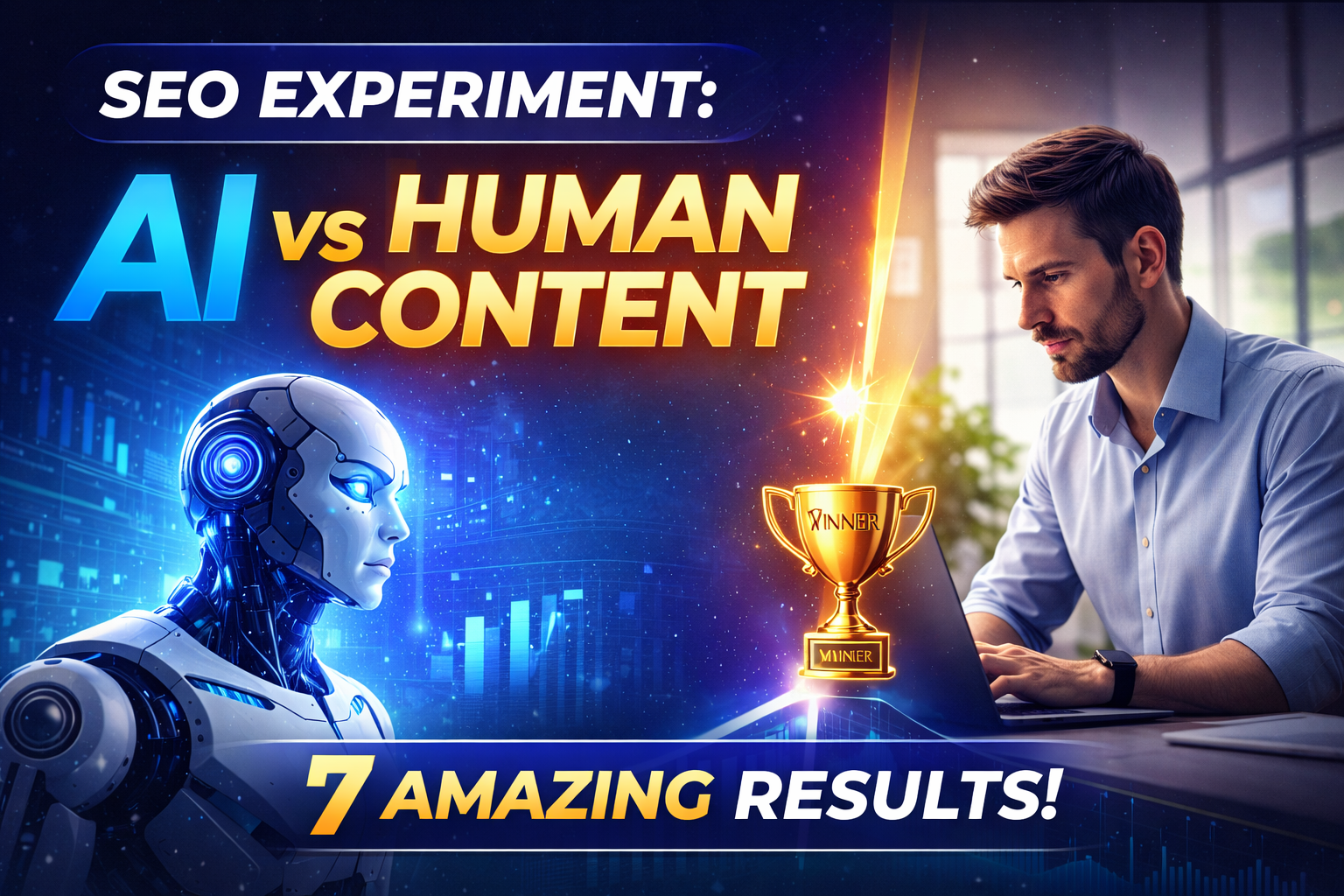
In today’s fast-changing digital world, content is the backbone of SEO. Every business wants to rank higher on Google and get more Organic Traffic. But now a big question is rising:
Should you use AI Content or Human Content for better SEO results?
To answer this, we conducted a real SEO Experiment comparing AI Content and human-written content. This blog explains everything in simple English so that even beginners and a digital marketer in 2026 can understand and apply it.
What is AI Content?
AI Content is content created using artificial intelligence tools. These tools generate blogs, articles, product descriptions, and more within seconds.
Features of AI Content:
- Fast content creation
- Low cost
- Can generate bulk content
- Uses data and patterns
Many businesses offering digital marketing services are now using AI to scale content production.

Read also : Programmatic SEO Case Study: Scaling Organic Traffic with Automation
What is Human Content?
Human content is written by real people. It is based on experience, creativity, and deep understanding.
Features of Human Content:
- High-quality and unique
- Emotional connection
- Better storytelling
- More accurate in complex topics
About Our SEO Experiment
Let’s understand how we tested both types of content.
Goal:
Find out which content ranks better and drives more Organic Traffic
Setup:
- Created 20 blog posts
- 10 written using AI Content
- 10 written by human writers
Target:
- Same keywords
- Same website
- Same publishing time
This ensured a fair SEO Experiment.
Read also : 7 Proven Local SEO Strategies That Boosted Google Maps Rankings
Content Strategy Used
Both AI and human content followed the same structure:
- SEO-friendly titles
- Proper headings (H1, H2, H3)
- Keyword placement
- Internal linking
- Meta descriptions
The only difference was the content creation method.
Metrics We Measured
To evaluate this SEO Experiment, we tracked:
- Google rankings
- Organic Traffic
- Time on page
- Bounce rate
- Engagement
Read also : Starbucks Marketing Strategy| Connecting People Through Coffee
Results After 60 Days
Now let’s see what happened in this SEO Experiment.
1. Ranking on Google
- Human Content ranked faster
- AI Content took more time to rank
Reason: Human content had better depth and quality.
2. Organic Traffic
- Human Content: Higher traffic
- AI Content: Moderate traffic
Human-written blogs attracted more users and clicks.
3. User Engagement
- Human Content: More time on page
- AI Content: Higher bounce rate
Users stayed longer on human-written content.
4. Content Production Speed
- AI Content: Very fast
- Human Content: Time-consuming
AI clearly wins in speed.
Final Result of SEO Experiment
After analyzing all data:
Winner: Human Content
But this does not mean AI Content is useless.
Both have their own strengths.
Why Human Content Performed Better
Here are the main reasons:
1. Better Understanding of User Intent
Humans understand what users really want.
2. High Content Quality
Human writers provide deeper insights.
3. Trust and Credibility
Google prefers helpful and reliable content.
4. Engagement Factor
Human content keeps readers interested.
Where AI Content Works Best
Even though human content wins, AI Content is still very useful.
Best Use Cases:
- Bulk content creation
- Product descriptions
- Basic blog drafts
- SEO outlines
Many digital marketing services agencies use AI to speed up work.
Best Strategy: Combine AI and Human Content
The smartest approach for a digital marketer in 2026 is to use both.
Hybrid Strategy:
- Use AI for research and drafts
- Use humans for editing and improvement
This gives:
- Speed + Quality
- Scale + Creativity
Common Mistakes to Avoid
When using AI Content, avoid these mistakes:
1. Publishing Without Editing
Always review AI-generated content.
2. Low-Quality Content
Do not publish thin or duplicate content.
3. Keyword Stuffing
Keep content natural.
4. Ignoring User Experience
Content should be easy to read and useful.
Tips to Improve AI Content for SEO
If you are using AI Content, follow these tips:
- Add human touch
- Include real examples
- Improve readability
- Add internal links
- Update content regularly
Impact on Digital Marketing Services
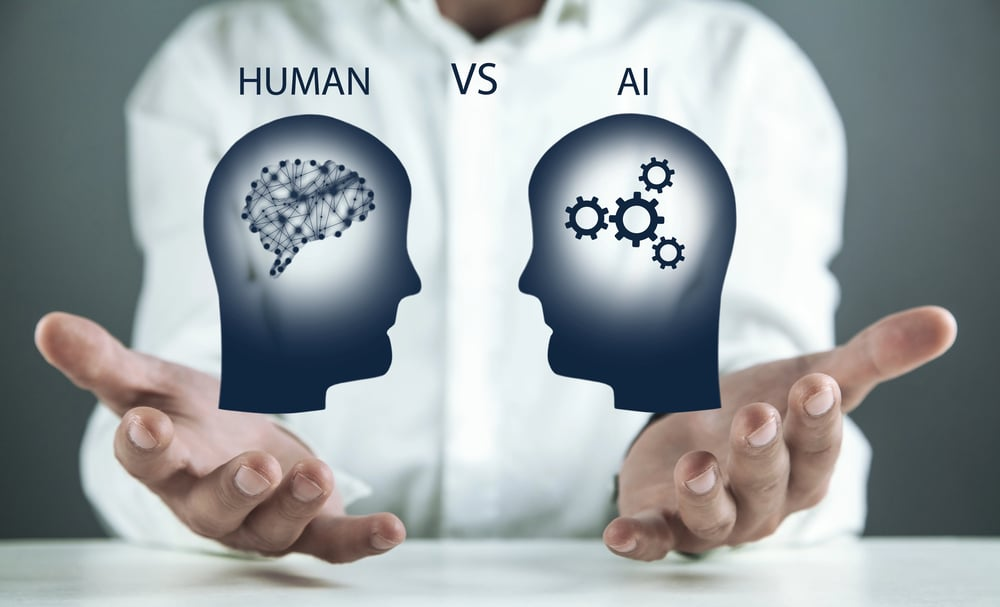
This SEO Experiment shows that agencies offering digital marketing services must balance speed and quality.
Key Takeaways:
- AI helps scale content
- Humans improve quality
- SEO success needs both
Future of Content in SEO
For a digital marketer in 2026, the future is clear:
- AI will grow faster
- Content competition will increase
- Quality will matter more
Google will reward:
- Helpful content
- User-focused content
- Trustworthy content
Final Thoughts
This SEO Experiment: AI Content vs Human Content – Who Wins? clearly shows that human content performs better in SEO.
But ignoring AI Content is also a mistake.
The best strategy is to combine both and create high-quality, scalable content.
If you want more Organic Traffic and better rankings, focus on:
- Quality content
- Smart use of AI
- Strong SEO strategy
FAQs
1. What is an SEO Experiment in content marketing?
An SEO Experiment is a test where different strategies are compared to see which one performs better on search engines. In this case, it compares AI Content and human-written content to find which drives more Organic Traffic.
2. Is AI Content good for SEO in 2026?
Yes, AI Content can help in SEO if used correctly. For a digital marketer in 2026, AI is useful for creating drafts and scaling content, but it should always be edited for quality and accuracy.
3. Why does human content perform better in SEO?
Human content performs better because it offers deeper insights, better readability, and a stronger connection with users. This improves engagement and helps increase Organic Traffic.
4. Can AI Content replace human writers?
No, AI Content cannot fully replace human writers. It can assist in content creation, but human creativity, experience, and understanding are still important for high-quality SEO content.
5. What is the best strategy for using AI Content in SEO?
The best strategy is to combine AI Content with human editing. This hybrid approach helps deliver both speed and quality, making it ideal for businesses offering digital marketing services.